

Concrete seems indestructible. It is dense, heavy, and built to last decades. But residential concrete in Pennsylvania takes a specific kind of punishment every winter that most homeowners do not fully understand until they start seeing cracks, spalling, and surface deterioration that was not there a few years ago.
The Freeze-Thaw Cycle and What It Does to Concrete
Concrete is porous. When water inside those concrete pores freezes, it expands by approximately nine percent in volume. That expansion generates internal pressure within the concrete structure. Repeated freeze-and-thaw cycles — which Pennsylvania experiences dozens of times between November and March — subject the concrete to that expansion-and-contraction cycle over and over throughout the winter.
Over time, those repeated pressure cycles create micro-fractures that grow into visible cracks. The surface layer of concrete spalls away in flakes and chips.
How Biological Growth Makes It Worse
Biological growth on concrete traps moisture on its surface and within its pores. Clean concrete dries out between weather events. Concrete covered in biological growth stays wet significantly longer because the organic layer traps moisture rather than allowing it to evaporate.
More moisture in the concrete pores means more water available to freeze during cold snaps. The algae and organic film that develop on concrete throughout the warm season are actively accelerating the structural deterioration of your concrete surfaces heading into winter.
Deicing Salt Compounds the Damage
Salt lowers the freezing point of water, so melting and refreezing occur at lower temperatures than they would without salt. That extends the range of temperatures over which freeze-thaw cycling occurs and increases the number of cycles the concrete experiences per winter. Salt also chemically reacts with calcium hydroxide in concrete, producing compounds that cause surface scaling and deterioration over time.
What Professional Cleaning Does to Interrupt This Cycle
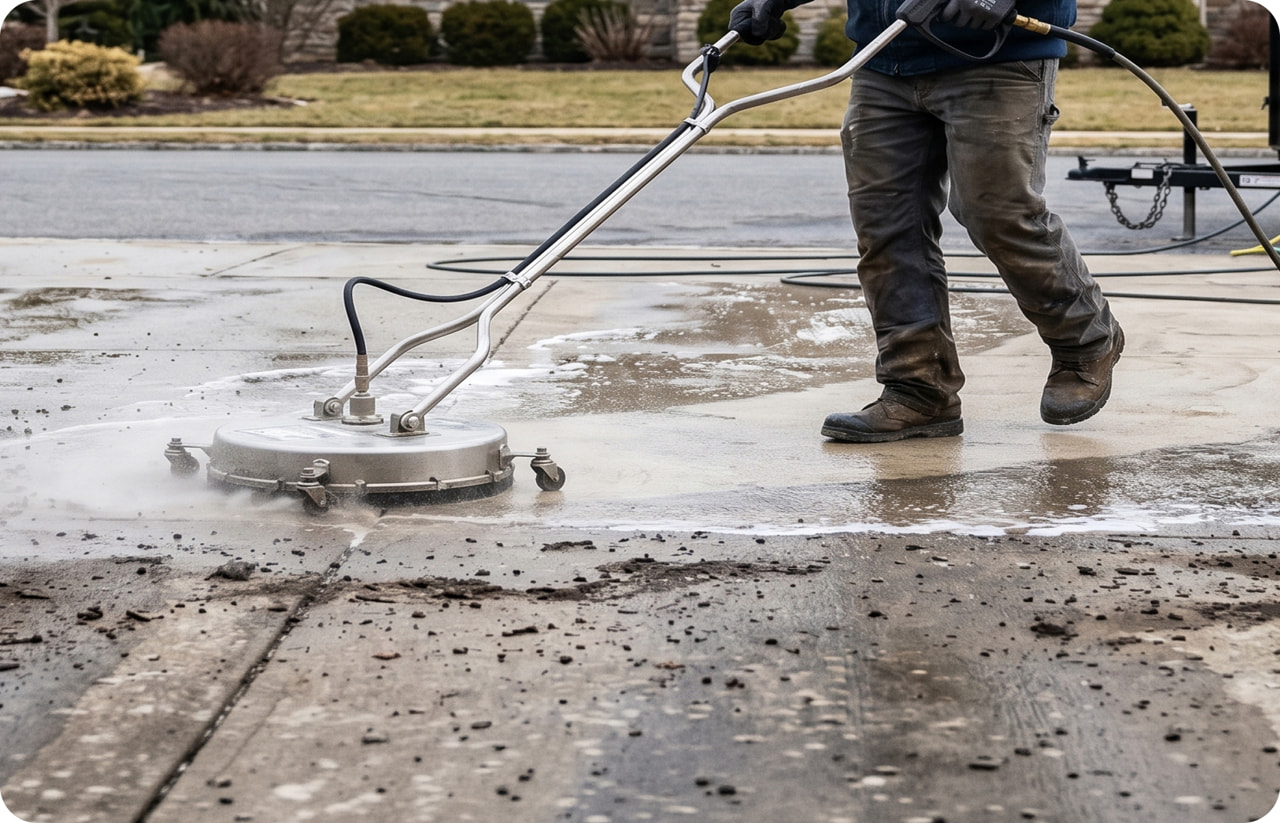
Professional concrete cleaning in the fall removes biological growth that has accumulated over the spring and summer. That removal gives the concrete a chance to dry out more completely before winter arrives.
Concrete that goes into winter cleaner and drier experiences less internal freeze-thaw pressure. The deterioration cycle is slowed significantly.
For concrete surfaces around your home that need attention before winter, concrete cleaning in Northumberland, PA, from Kleen-N-Brite removes biological growth completely and gives your concrete the best chance of coming through another Pennsylvania winter in good shape.
